Loading...
Loading...
Pioneering AI-integrated point-of-care diagnostics at the intersection of nanotechnology, machine learning, and clinical medicine
My research program aims to revolutionize early disease detection by developing next-generation solid-state nanopore biosensors that combine single-molecule sensitivity with machine learning for unprecedented diagnostic accuracy.
With demonstrated success in translational research and partnerships with industry leaders, I bridge fundamental biophysics and nanoscience with biomedical applications to advance personalized medicine.
Understanding the fundamental technology behind our research
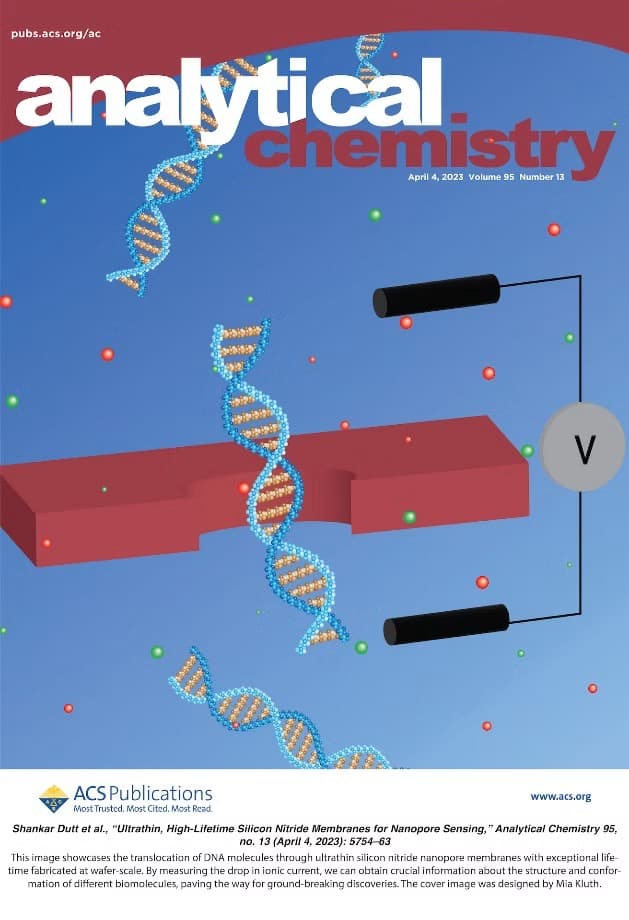
Nanopores are tiny holes, just a few nanometers in diameter (about 10,000 times thinner than a human hair), that act as molecular sensors capable of detecting individual molecules as they pass through.
A nanopore separates two chambers filled with electrolyte solution. When voltage is applied, ions flow through the pore, creating a measurable electrical current.
When a biomolecule (DNA, RNA, or protein) approaches the pore, the electric field drives it through the nanometer-sized opening.
As the molecule passes through, it partially blocks the ion flow, causing a characteristic dip in the current signal unique to that molecule.
The depth, duration, and shape of these current blockades reveal the molecule's size, shape, and even conformational state.
Interactive visualizations of the two fundamental sensing mechanisms used in nanopore research
Interactive Animation: View on a larger screen for the best experience
Resistive Pulse Sensing: Molecules passing through the nanopore cause temporary current blockades proportional to their size. Higher voltage increases translocation speed.
Interactive Animation: View on a larger screen for the best experience
Ion Current Rectification: Conical nanopores with surface charges show asymmetric conductance. Current flows more easily from wide to narrow end (positive voltage) due to ion accumulation effects.
No fluorescent tags or chemical modifications needed - detect molecules in their native state
Detect individual molecules one at a time, revealing heterogeneity invisible to bulk methods
Continuous monitoring of molecular events as they happen, enabling dynamic studies
Solid-state nanopores can be mass-produced using semiconductor fabrication techniques
Silicon nitride membranes are chemically stable and pore size can be precisely controlled
Works with tiny sample volumes, ideal for precious clinical samples
Explore interactive visualizations of our interdisciplinary research program
Our nanopore platform enables single-molecule detection of proteins, DNA, and other biomolecules. By fabricating nanometer-scale pores in thin silicon nitride membranes, we can detect molecules as they pass through, creating characteristic current signatures that reveal molecular identity and conformation.
Our research focuses on early detection of neurodegenerative diseases through the identification of Neurofilament Light Chain (NfL) - a biomarker released when neurons are damaged. This enables detection of Alzheimer's, ALS, and other neurological conditions from a simple blood test, potentially years before symptoms appear.
Machine learning algorithms analyze the complex electrical signals from nanopore measurements, enabling automated identification of biomolecules with superhuman accuracy. Our neural networks process millions of translocation events to extract meaningful diagnostic information in real-time.
Extending our nanopore technology to detect cardiac biomarkers like troponin for rapid, point-of-care diagnosis of heart attacks. Our goal is a portable device that can detect cardiac events within minutes, enabling faster treatment and better patient outcomes.
First demonstration of solid-state nanopore sensing for analyzing disease-relevant RNA conformational dynamics. We study neuron-specific tRNA mutations that cause neurodegeneration and investigate how therapeutic drugs affect RNA conformations at the single-molecule level - opening new avenues for drug screening and RNA therapeutics.
Partnering with ACT Health, Icon Water, and Rio Tinto to develop nanopore sensors for heavy metal detection in water. This work addresses critical environmental health challenges including metal contamination from natural disasters like bushfires and floods, enabling real-time water quality monitoring.
Developing novel ultrasonic-assisted coating techniques for carbon fibre composites. This materials science research improves adhesion and uniformity of functional coatings on carbon fibre strips for aerospace and structural applications, enabling enhanced material properties and performance.
I'm always looking for opportunities to collaborate on innovative biosensing and diagnostics research.